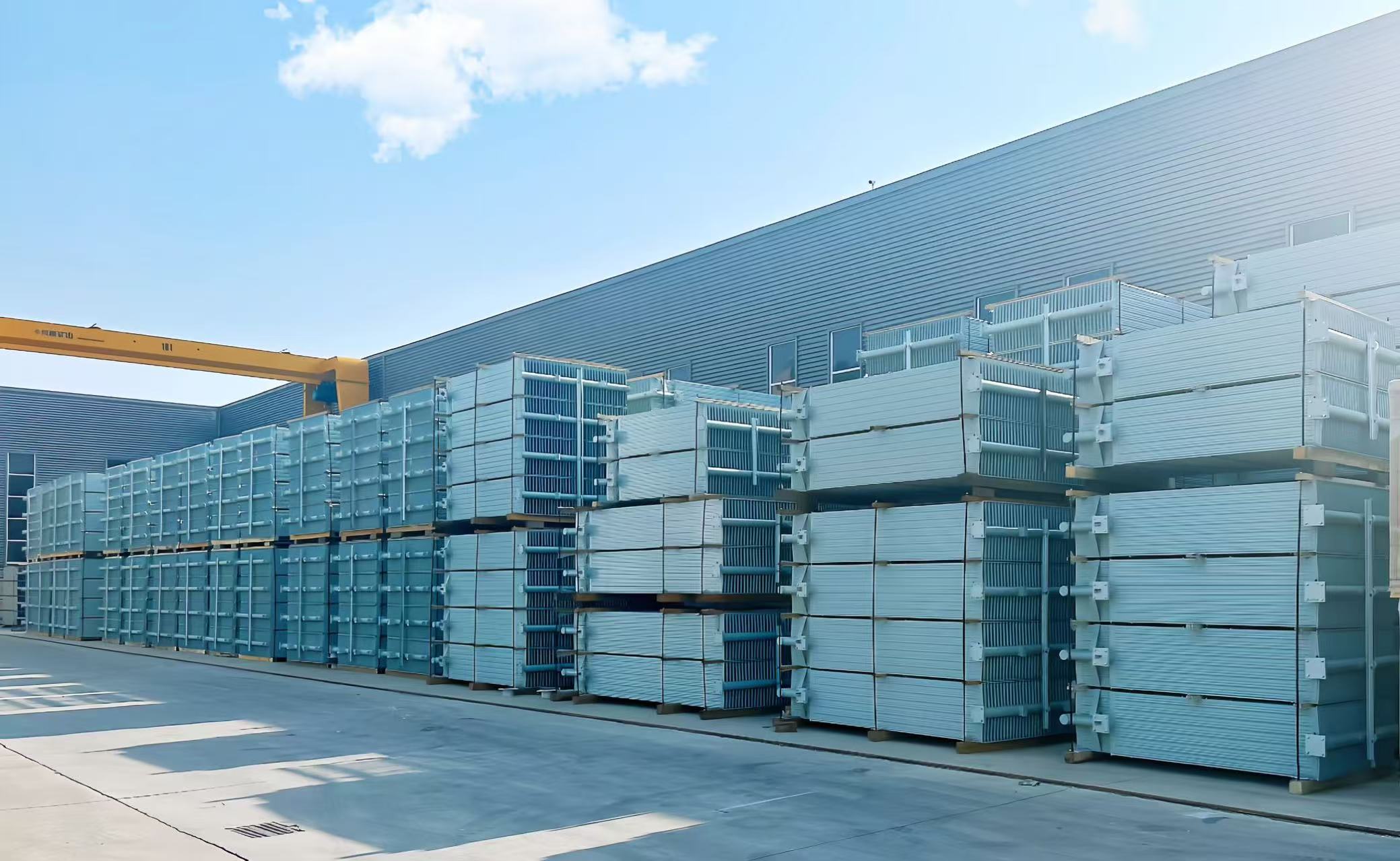
Power Enclosure Specification Guide: What Buyers Should Confirm Before Fabrication
A power enclosure should be specified around the equipment it needs to contain and the conditions of the project. Overall length, width and height are important, but they are not enough to define the complete enclosure.
Equipment layout, access requirements, cable routing, interfaces, installation conditions and environmental requirements should be reviewed before fabrication. If these items are left until late in the project, changes to the enclosure can affect both manufacturing and site installation.
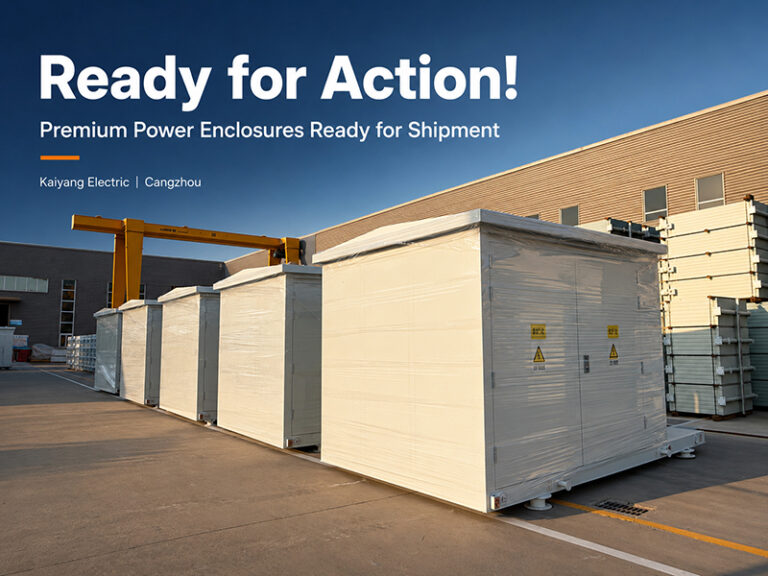
Kaiyang Electric develops and manufactures power enclosures as part of its power equipment and energy solutions business. For customized projects, buyers should provide the available equipment and layout information before the enclosure configuration is finalized.
Start with What Will Be Installed Inside the Enclosure
Before discussing the external enclosure dimensions, define the equipment that needs to be accommodated.
The supplier needs to understand the internal arrangement that the enclosure must support.
Useful information can include:
– Equipment list
– Equipment dimensions
– Equipment layout
– Required clearances defined by the project
– Cable routing requirements
– Access requirements
– Interface locations
– Required quantity
If the internal equipment layout is not final, buyers should identify the current drawing as preliminary.
A change in internal equipment can require corresponding changes to enclosure dimensions, openings or access arrangements.
Overall Dimensions Should Follow the Project Layout
Power enclosure dimensions should be coordinated with both the internal equipment and the available installation area.
Before finalizing dimensions, buyers should check:
– Maximum available installation space
– Internal equipment arrangement
– Required access areas
– Cable entry and exit positions
– Connection interfaces
– Transportation or site access restrictions
– Relationship with surrounding equipment or structures
Where the enclosure is being integrated into a larger power project, the enclosure drawing should be checked against the latest site layout.
Do not rely only on dimensions from an older project unless the equipment and site conditions have been verified as applicable.
Plan Openings and Interfaces Before Fabrication
Openings are easier to coordinate during the design stage than after fabrication.
Buyers should identify where cables, equipment connections or other required interfaces need to enter or leave the enclosure.
Interface Checklist
– Cable entry locations
– Cable exit locations
– Equipment connection positions
– Required openings
– Interface dimensions
– Door or access locations
– Mounting requirements
– Other project-specific penetrations
The exact size and location of each opening should be confirmed through the applicable technical drawing.
If equipment interfaces change during the project, the enclosure drawing should be updated before manufacturing.
Access Requirements Need Project-Specific Planning
The enclosure should allow the project to achieve its required access arrangement.
The purchasing team should therefore consider how equipment will be installed and how the project expects it to be accessed after installation.
Questions to confirm include:
– Which equipment requires access?
– From which side is access required?
– Are removable or openable areas required by the project?
– Is equipment expected to be installed before or after enclosure placement?
– Are there site restrictions around the enclosure?
– Are there internal layout restrictions that affect access?
The answers depend on the actual equipment and project design and should not be assumed from the external appearance of the enclosure.
Describe the Installation Environment
If the project has specific environmental requirements, these should be included in the inquiry.
Buyers should identify whether the enclosure is intended for an indoor or outdoor location and provide any defined project requirements relating to the operating environment.
Where a particular protection level, temperature condition, corrosion requirement or other performance specification is required, it should be explicitly stated and confirmed for the selected configuration.
Do not assume an environmental rating or material requirement when it has not been specified in the technical information.
Coordinate the Enclosure with the Site Before Production
For new power projects, enclosure design and site design should be coordinated before the foundation, cable routes and surrounding structures are finalized.
For existing projects, actual measurements can help identify restrictions that are not obvious from older drawings.
Site Information Checklist
– Installation location
– Available footprint
– Foundation or mounting information
– Cable route
– Nearby equipment
– Access route
– Transportation restrictions
– Site photographs where useful
– Latest project layout
If the available site dimensions differ from the original drawings, the technical team should use the confirmed current information.
What Should Buyers Provide in a Power Enclosure RFQ?
A complete RFQ does not need every detail to be final, but it should clearly show what is known and what still requires technical confirmation.
Before Ordering
– Required quantity
– Overall dimensional requirements
– Internal equipment list
– Equipment layout
– Equipment dimensions
– Cable entry requirements
– Interface locations
– Access requirements
– Installation environment
– Site layout
– Project-specific performance requirements
– Available technical drawings
– Required project schedule
When several enclosures with different layouts are included in one project, each configuration should be identified clearly.
How to Compare Power Enclosure Suppliers
Supplier comparison should focus on whether each quotation addresses the same project scope.
Before comparing the commercial terms, verify:
– The same dimensions are being quoted
– The same quantity is included
– Internal equipment requirements are understood
– Openings and interfaces are based on the same drawing
– Environmental requirements are aligned
– Access arrangements are comparable
– The installation scope is clear
– Drawing approval requirements are defined
– Preliminary items are clearly identified
Kaiyang Electric was founded in 2004 and has developed into an enterprise with four specialized subsidiaries. The provided company information states that its products include transformers, transformer radiators, transformer air coolers and power enclosures, with products and solutions supplied to customers worldwide and experience across more than 200 power projects.
These company-level capabilities can support supplier evaluation, but the configuration of an individual power enclosure still needs to be confirmed against the current project requirements.
Common Mistakes When Ordering a Power Enclosure
Defining only the external dimensions
The internal layout, openings and interfaces also need to be considered.
Finalizing the enclosure before the equipment layout
Changes to internal equipment can affect enclosure dimensions and openings.
Leaving cable entry positions undefined
Cable routing should be coordinated with the enclosure and site layout before fabrication.
Using an old project drawing
The latest equipment and site drawings should be used for technical confirmation.
Assuming environmental performance
Required environmental specifications should be stated rather than inferred from the product name.
Starting site work before interface dimensions are confirmed
Where foundations, cable routes or surrounding structures depend on the enclosure, the approved drawing should be checked first.
FAQ
What information is needed to request a power enclosure quotation?
Buyers should provide quantity, dimensional requirements, equipment layout, cable entry information, installation conditions and technical drawings where available.
Can a power enclosure be designed from overall dimensions only?
Overall dimensions are only part of the requirement. Internal equipment, interfaces, access and project conditions should also be considered.
When should cable entry positions be confirmed?
They should be coordinated during the technical drawing stage before fabrication whenever possible.
What should I provide for a customized enclosure project?
Provide equipment drawings, internal layout, available site dimensions, required interfaces, access requirements and the operating environment.
Should site construction begin before the enclosure drawing is approved?
If foundations, cable routes or surrounding construction depend on enclosure dimensions, those interfaces should be checked against the confirmed technical drawing first.
Conclusion
Power enclosure procurement becomes more predictable when buyers coordinate the internal equipment, external dimensions, interfaces, access and site conditions before fabrication. The enclosure should be treated as part of the complete power project rather than as an empty box defined only by three dimensions.
For a power enclosure inquiry with Kaiyang Electric, prepare the equipment list, layout drawing, dimensional limits, required quantity, cable and interface information, installation environment and site layout. These details give the technical team a clearer basis for project-specific design confirmation and quotation.