
How to Identify Transformer Radiator Oil Leaks – Kaiyang Electric Quality Control Standards
The transformer is the heart of any substation—its operational status directly determines the safety and stability of the entire power system. As the core cooling component of oil‑immersed transformers, the radiator plays a critical role. Once an oil leak occurs, it not only compromises cooling efficiency and lowers oil levels but also degrades insulation performance, potentially leading to overheating, short circuits, burning, or even catastrophic explosions. Accurately and rapidly detecting radiator oil leaks, combined with scientific diagnostic methods to pinpoint leak sources, is therefore a top priority in transformer operation and maintenance.
As a professional enterprise specializing in the design, production, and sales of transformer panel‑type radiators, Cangzhou Kaiyang Electric Co., Ltd. (Kaiyang Electric) upholds stringent quality standards throughout the manufacturing process. Our quality inspectors are involved at every stage of production, ensuring that all product parameters fully comply with customer requirements. This article systematically outlines the methods for identifying radiator oil leaks and the corresponding treatment procedures, drawing on industry‑standard detection practices and Kaiyang Electric’s quality control system.
1. Common Causes of Transformer Radiator Oil Leaks
To accurately identify oil leaks, it is essential to understand where and why they typically occur. Industry statistics show that radiator interfaces, flat butterfly valve caps, and connection flanges account for over 50% of all leak points. Common causes include:
1. Welding Defects
Radiator heat pipes are typically manufactured by flattening seamed steel pipes and then stamping them. Oil leakage frequently occurs at the bending and welding sections due to residual stress. Poor welding quality—such as incomplete penetration, cold welds, pinholes, or blowholes—often remains hidden under factory‑applied flux and paint, only to surface after the transformer enters service.
2. Sealing Failure at Connection Points
Loose bolts at flange connections between the radiator and the main tank, or aged/cracked sealing gaskets (oil‑resistant rubber or asbestos), manifest as persistent seepage at joints. Uneven flange surfaces and improper installation techniques are also significant contributing factors.
3. Mechanical Damage
External impacts can cause dents, cracks, or deformation in radiator fins, while abnormal spacing between fin panels may compromise sealing integrity.
4. Manufacturing and Installation Deficiencies
Rust, burrs, grooves on contact surfaces, and improperly positioned or tensioned sealing rings can all lead to oil leakage over time.
2. The Three‑Step Leak Detection Method: Clean → Observe → Verify
To pinpoint leaks in panel‑type radiators, we recommend a “Clean → Observe → Verify” three‑step approach, combining equipment structure analysis, oil stain pattern recognition, and auxiliary diagnostic tools for precise localization.
Step 1: Safety Preparation
Before beginning any leak inspection, ensure the equipment is in a safe condition:
Disconnect power on both high‑voltage and low‑voltage sides and post warning signs.
Discharge and ground the transformer windings, core, and outer shell.
Clean up surrounding oil contamination and set up safety barriers.
Step 2: Surface Cleaning + Visual Observation
Oil stains from leaks develop distinctive patterns based on the duration and location of seepage. Begin by removing surface contaminants:
Wipe the radiator surface with a lint‑free cloth or cleaning agent, focusing on welds, joints, and fin gaps where oil may have accumulated.
For heavy oil buildup, first blow off loose dust with compressed air (0.2–0.3 MPa), then wipe with a neutral detergent.
After cleaning, allow 10–15 minutes for fresh seepage to naturally emerge for easier observation.
Oil Stain Pattern Recognition:
Fresh leaks: Wet, glossy surface with an oily feel; stains spread in a “radial” pattern from the leak point.
Old leaks: Dry, darkened surface with blurred edges.
Inspection Sequence:
Flange joints, valves, and plugs – account for over 60% of all leak points.
Radiator fin seam welds and frame connection welds – especially at corners.
Radiator fin body – check both bottom and top sections.
Step 3: Auxiliary Verification Methods
For concealed or minor seepage (where no visible oil stain appears under normal pressure), use pressurization or auxiliary tools for confirmation:
Soapy Water Bubble Test (Most Common) :
Fill the radiator with 0.05–0.1 MPa compressed air or nitrogen (first close the isolation valve connecting to the main tank).
Apply soapy water evenly over suspected leak areas with a brush.
Observe for continuous bubble formation—bubbles at joints indicate sealing failure; bubbles at welds indicate weld cracks.
Pressure Decay Method:
Monitor pressure changes after pressurizing the transformer to assess overall system sealing integrity.
Infrared Thermography:
Identify oil stains or abnormal cooling zones through temperature differential analysis. When a radiator bank experiences blockage or failure, the affected section appears as a cooler region on the thermal image, creating a clear temperature contrast with adjacent normal sections. Infrared imaging can also clearly visualize the oil level line in the conservator.
Tool‑Assisted Observation:
Use a flashlight at an oblique angle to spot oil droplets in narrow gaps.
Use a magnifying glass or magnetic particle inspection pen to examine suspected cracks.
3. Gasket Condition Assessment and Replacement Criteria
Aged gaskets are a leading cause of oil leaks. Use the following criteria to determine whether gasket replacement is necessary:
Seepage Indicators:
Oil stains or traces at sealing surfaces without active dripping—if repeated tightening fails to stop seepage, the gasket has failed.
Continuous dripping or oil flowing along joints—immediate replacement required.
Visual and Physical Condition:
Hardening, brittleness, surface cracking, excessive swelling/stickiness.
Tears, holes, or deformation.
Service Life:
Rubber seals typically have a service life of 3–5 years. Even without visible leakage, seals exceeding 5 years should be replaced during scheduled maintenance.
4. Kaiyang Electric Quality Control: Eliminating Leak Risks at the Source
Identifying leaks addresses the symptom—controlling quality at the manufacturing source is the true cure. Kaiyang Electric has established a comprehensive quality control system for transformer panel‑type radiators:
Modern Production Capabilities:
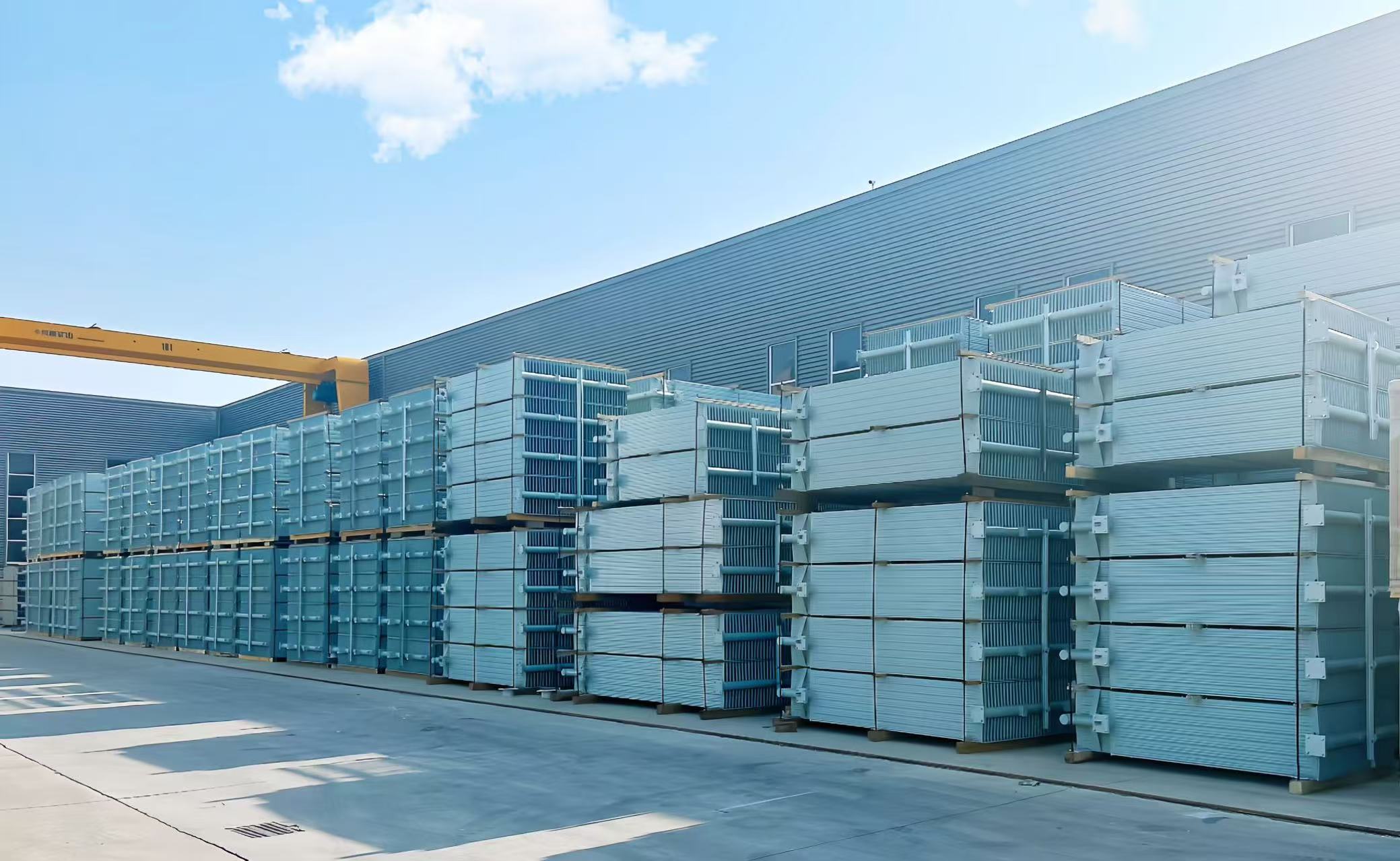
Our facilities include two modern production workshops equipped with CNC punch presses, laser cutters, CNC bending machines, and dozens of other advanced units. We have also built automated coating production lines, spray painting lines, and automatic radiator panel assembly lines. Precision machining ensures the accuracy and consistency of all radiator components, minimizing welding defects and processing imperfections from the very start.
End‑to‑End Quality Inspection:
Quality inspectors participate throughout the entire production process—from raw material incoming inspection to finished product dispatch. Every step is governed by strict quality standards. Our panel‑type radiator designs strictly comply with relevant industry standards and contractual technical specifications.
Factory Acceptance Testing:
Every radiator undergoes rigorous sealing integrity testing before leaving the factory, ensuring zero leakage and zero defects upon delivery to customers.
Full‑Process Service Commitment:
Kaiyang Electric provides end‑to‑end service coverage—from design and manufacturing, through factory monitoring and transportation, to installation and maintenance support.
5. Daily Preventive Maintenance Recommendations
Beyond mastering leak detection methods, routine preventive maintenance is equally important:
Weekly Visual Inspection: Check radiator surfaces for deformation, rust, broken fins, and inspect frame welds, connecting pipes, and flanges for oil seepage.
Regular Cleaning: Use compressed air to blow dust backward through fin gaps quarterly (monthly in high‑dust environments). Never wash with water directly—moisture ingress into the transformer oil circuit must be avoided.
Semi‑Annual Targeted Inspection: Apply soapy water to flange sealing surfaces, manifold interfaces, and valves, observing for bubbles.
Cooling Performance Monitoring: During operation, use an infrared thermometer to compare temperature across different radiator zones. A localized temperature difference exceeding 10°C indicates dust accumulation or blockage in that area, requiring focused cleaning.
Maintenance Recordkeeping: Document inspection dates, issues found, and corrective actions after each maintenance session for future traceability.
Conclusion
Transformer radiator oil leaks are a serious concern—timely detection, accurate diagnosis, and proper remediation are the keys to ensuring safe transformer operation. From routine visual inspections and soapy water bubble tests to advanced infrared thermography, multiple complementary methods enable effective leak localization and risk elimination.
However, to fundamentally reduce the occurrence of oil leaks, choosing a manufacturer with a rigorous quality control system is essential. Kaiyang Electric is committed to upholding the principles of “Quality, Value, Service” , producing high‑quality, zero‑defect transformer panel‑type radiators through strict production standards. Our full‑process quality management—from design and manufacturing to after‑sales service—is the best testament to our promise of eliminating leak risks at the source.
For any questions regarding transformer panel‑type radiator selection, inspection, or maintenance, please feel free to contact the Kaiyang Electric technical team.